
Default Skin- (Modern Design)
- Visit the summit or second floor for panoramic views
- Enjoy photo moments at Champ de Mars and Trocadéro
- Glide past Notre-Dame, Louvre, and Musée d’Orsay
- Best enjoyed during sunset or evening hours
- See the Mona Lisa and iconic Renaissance artworks
- Spend a few hours exploring curated museum sections
- Stroll through Palais Royal Gardens
- Explore Galerie Vivienne and covered passages
- Visit Sacré-Cœur Basilica and its viewpoint
- Walk through Place du Tertre and artist alleys
- Visit Du Pain et des Idées for signature pastries
- Enjoy a classic French breakfast experience
- Explore the Hall of Mirrors and royal rooms
- Walk through the vast palace gardens
- Walk the Champs-Élysées shopping boulevard
- Climb Arc de Triomphe for skyline views
- See Notre-Dame Cathedral and surroundings
- Walk along Île de la Cité and nearby bridges
- Visit Shakespeare and Company bookstore
- Wander student streets and cafés
- Enjoy panoramic city views from the observation deck
- Capture sunset and night cityscapes
- Walk landscaped paths and fountains
- Enjoy peaceful seating and garden views
- Visit Place des Vosges
- Explore boutiques and galleries
- Shop for perfumes, chocolates, and gifts
- Visit Galeries Lafayette or local markets
Shortcode (Above timeline uses this shortcode) :-
[cool-timeline category="paris-trip-itinerary" layout="horizontal" designs="design-6" skin="default" show-posts="14" story-date="show" date-format="F j" icons="icon" animation="none" story-content="full" based="custom" year-label="show" filters="no" order="ASC" ]
Dark Skin - (Modern Design)
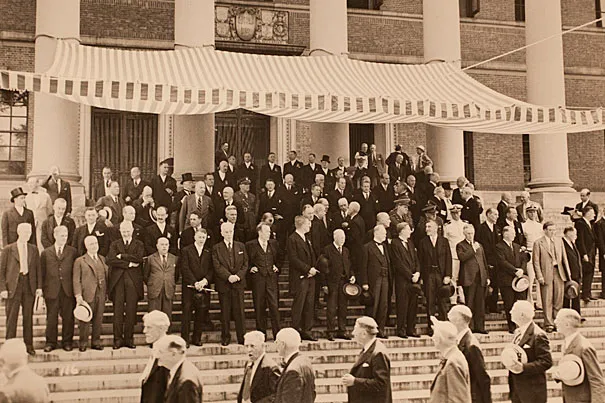
Harvard College is founded in Cambridge, Massachusetts, with a grant from the General Court of the Massachusetts Bay Colony. The college is named after its first benefactor, the clergyman John Harvard.
Harvard holds its first commencement ceremony and begins formal instruction, laying the foundation for higher education in the American colonies.
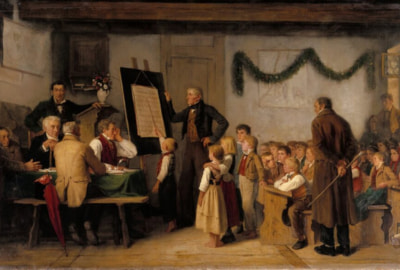
The college strengthens its curriculum in theology, philosophy, and classical languages, shaping early academic traditions.
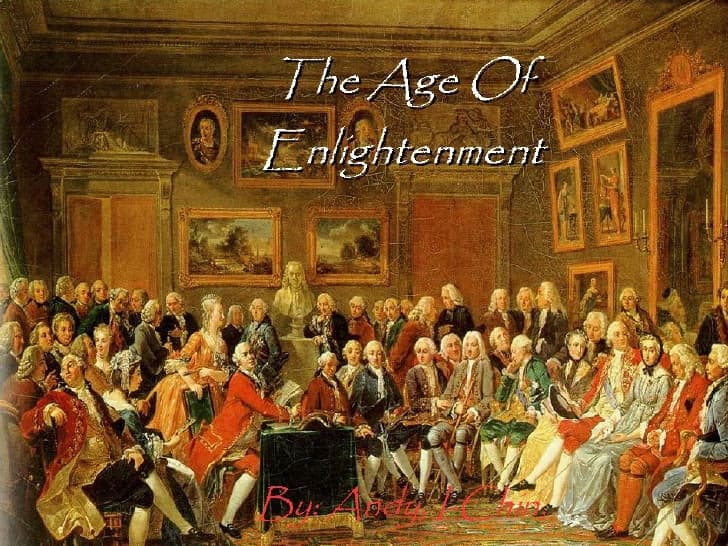
After a major library fire, Harvard rebuilds its collections and modernizes teaching with a stronger focus on science and reason.
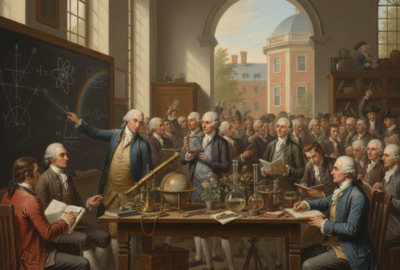
Harvard College expands its curriculum to include mathematics, natural philosophy, and other subjects. The college also establishes a medical school, which becomes the first in North America.
Harvard broadens its studies to include mathematics, natural philosophy, and modern sciences, moving beyond its religious roots.
Shortcode (Above timeline uses this shortcode) :-
[cool-timeline layout="horizontal" category="harvard-university" skin="dark" designs="design-6" show-posts="6" order="ASC" items="3" icons="dot" story-content="full" based="default" autoplay="false" autoplay-speed="3000" start-on="0" date-format="Y" ]
Light Skin (Modern Design)
Deep learning models like convolutional neural networks enabled AI to learn directly from massive datasets. This breakthrough powered image recognition, speech processing, and recommendation systems, laying the groundwork for data-driven automation across industries.
Google DeepMind’s AlphaGo defeated a world champion, proving reinforcement learning could master complex decision-making. This moment demonstrated AI’s ability to evaluate possibilities, plan ahead, and outperform humans in strategic environments.
AI voice technologies like Google Assistant and Amazon Alexa achieved near-human speech recognition. Voice commands began replacing typing, enabling hands-free search, smart homes, and conversational interfaces that reshaped everyday human–machine interaction.
Language models such as GPT-3 began generating blogs, emails, and marketing copy. Businesses adopted AI writing tools to scale content production, reducing dependency on human writers while maintaining readability and contextual relevance.
AI platforms like Dialogflow and IBM Watson powered intelligent chatbots capable of resolving customer issues. Companies shifted from human-heavy support teams to AI-driven systems offering instant, multilingual, round-the-clock assistance.
Generative tools like DALL·E and Midjourney transformed design workflows. Creators started generating images, concepts, and visual assets from text prompts, turning AI into a creative partner rather than a simple automation tool.
ChatGPT popularized conversational AI, allowing users to interact naturally with machines. Instead of searching keywords, people began asking questions, getting explanations, and completing tasks through human-like AI conversations.
AI tools like Salesforce Einstein and Google Vertex AI began automating decisions in marketing, analytics, and operations. Businesses relied on AI for predictions, personalization, and optimization with minimal human intervention.
AI copilots such as Microsoft Copilot and GitHub Copilot integrated directly into daily tools. Employees used AI to draft documents, write code, and manage tasks, redefining productivity and collaborative work.
Autonomous AI agents powered by platforms like AutoGPT and enterprise AI orchestrators began managing end-to-end workflows. AI assigned tasks, tracked progress, and optimized outcomes, shifting human roles toward strategy and oversight.
[cool-timeline layout="horizontal" category="ai-evolution" skin="light" designs="design-6" show-posts="12" order="ASC" items="1" icons="dot" story-content="short" based="default" autoplay="false" autoplay-speed="3000" start-on="2"]